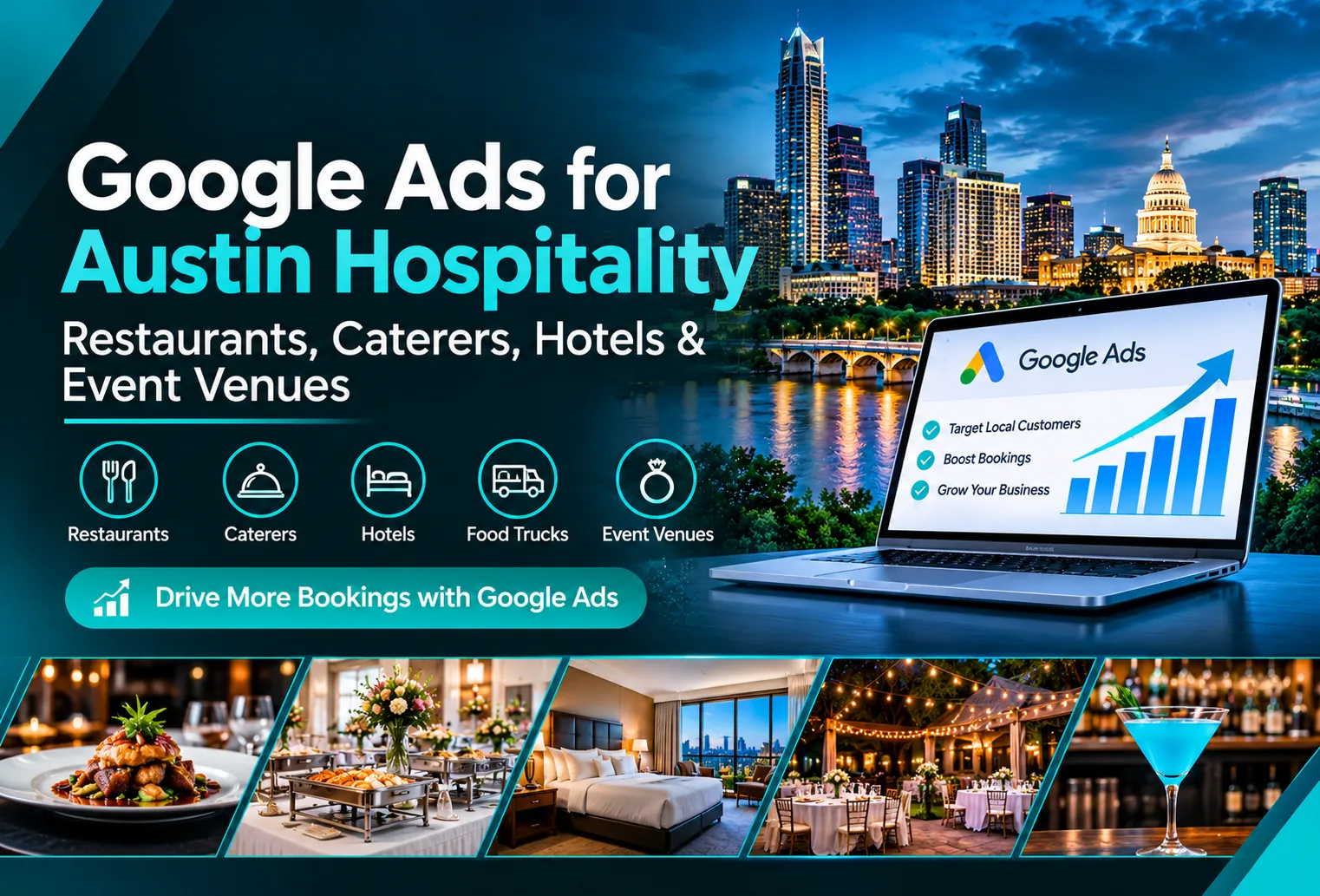
Why is Google Ads for Austin Hospitality Businesses Different?
Hospitality advertising must match the customer’s immediate intention. Someone searching for dinner tonight has different needs from a company arranging corporate catering or a couple comparing wedding venues for next year.
Austin businesses also need to account for local events and seasonal demand. SXSW, Austin City Limits, holiday celebrations, conferences, and wedding dates can influence when customers search and how businesses allocate advertising budgets.
A strong strategy considers three factors:
- Local search intent: Target searches such as “Italian restaurant near me,” “corporate catering Austin,” or “wedding venue Austin TX.”
- Seasonal demand: Adjust budgets and messaging around relevant festivals, holidays, and booking periods.
- Booking value: Prioritize conversions that contribute to revenue, whether that means restaurant reservations, hotel bookings, catering contracts, or venue inquiries.
Campaigns should also reflect each business’s operating hours, location, availability, and service area. A food truck serving selected Austin neighborhoods needs a different geographic strategy from a hotel attracting travelers across the country.
How Much Do Google Ads Cost for Austin Hospitality Businesses?
Google Ads costs depend on keyword competition, geographic targeting, ad quality, bidding strategy, and the likelihood that a click will become a customer. Hospitality businesses should evaluate both cost per click (CPC) and cost per booking or qualified inquiry.
The following figures are illustrative planning estimates, not verified Austin-specific benchmarks or guaranteed results.
Business type | Illustrative CPC planning range | Primary conversion goal |
Restaurants | 1.50–4 | Reservations, calls, online orders |
Catering companies | 2–6 | Qualified catering inquiries |
Hotels | 2–8 | Direct booking or booking inquiry |
Food trucks | 1–4 | Calls, directions, location-related actions |
Bars | 1.50–5 | Calls, directions, event inquiries |
Wedding and event venues | 2–8+ | Qualified tours and booking inquiries |
Actual costs may fall outside these ranges. Use Google Keyword Planner and live campaign data to establish a more accurate budget for Austin and the specific services being advertised.
What Does Cost Per Booking Mean?
Cost per booking measures how much advertising spend is required to generate a completed booking. For businesses that receive inquiries before confirming a booking, cost per qualified lead is a useful intermediate metric.
For example, suppose an Austin catering company spends $1,000 on ads and generates 20 qualified inquiries. Its cost per inquiry is $50. If five of those inquiries become paying clients, its advertising cost per acquired client is $200.
This distinction matters because a low cost per click does not automatically mean a profitable campaign. Businesses should evaluate lead quality, close rates, average order value, and gross profit when deciding how much they can afford to spend.
How Should Google Ads Campaigns Be Set Up?
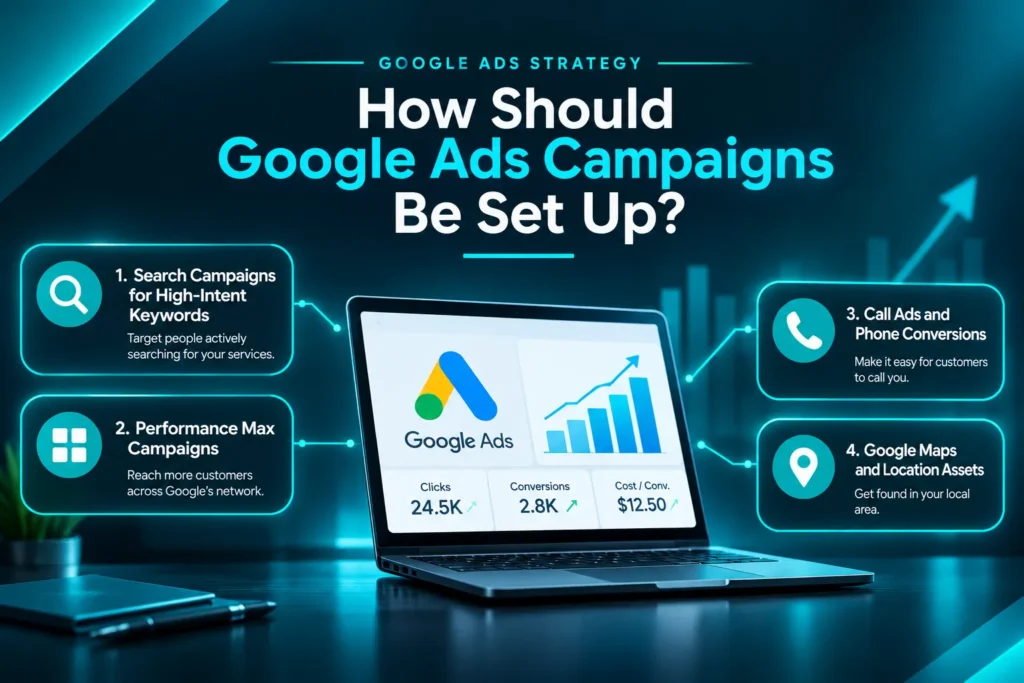
A successful campaign starts with a clear conversion goal, appropriate targeting, and a relevant destination for each ad. Hospitality businesses should avoid sending every visitor to the homepage when a dedicated menu, booking page, or catering form would better match the search.
1. Search Campaigns for High-Intent Keywords
Search campaigns can reach customers actively looking for a particular service.
Examples include:
- “restaurant reservations Austin”
- “catering Google Ads agency Austin” is an agency-related search; a caterer should instead target terms such as “corporate catering Austin.”
- “hotel near downtown Austin”
- “food truck catering Austin”
- “wedding venue Austin TX”
Create separate ad groups or campaigns for distinct services where the budget and search volume justify the separation. Use negative keywords to exclude irrelevant searches, such as jobs, recipes, or free services when those searches do not match the business.
2. Performance Max Campaigns
Performance Max can extend advertising across Google’s eligible channels using assets, audience signals, conversion goals, and automated bidding.
For hospitality businesses, it may help expand reach beyond traditional search ads. However, campaign automation does not remove the need for accurate tracking, relevant creative, appropriate targeting, and budget controls.
Start with clear business objectives and reliable conversion measurement. Evaluate whether Performance Max produces valuable bookings and inquiries rather than judging it solely by impressions or clicks.
3. Call Ads and Phone Conversions
Calls are especially important for restaurants taking reservations by phone, caterers discussing custom orders, and venues arranging tours.
Use appropriate call-focused ad formats and call assets where eligible. Track meaningful calls and, where possible, distinguish answered, qualified calls from short or irrelevant calls.
Make sure phone numbers are correct and staff can respond during advertised hours. Paying for calls that go unanswered can undermine an otherwise well-targeted campaign.
4. Google Maps and Location Assets
Eligible advertisers can use location assets to show business information, addresses, maps, and approximate distances in supported ad placements. These assets can connect Google Ads with a Google Business Profile.
This can be valuable for restaurants, bars, hotels, and food trucks with accurate business locations. Keep business information current and ensure that advertised locations match where customers can actually visit or receive service.
How Should Each Hospitality Business Approach Google Ads?
Although these businesses share local search opportunities, their campaigns should reflect different booking journeys.
Restaurants: Promote menus, reservations, online ordering, and specific dining experiences. Measure reservations, tracked calls, and completed orders where possible.
Catering companies: Target corporate catering, private events, wedding catering, and other profitable services. Send visitors to a dedicated inquiry form that asks about event date, guest count, location, and catering requirements.
Hotels: Focus on relevant accommodation searches, property amenities, location, and direct-booking opportunities. Compare the cost of acquiring direct bookings with the economics of third-party booking channels.
Food trucks: Emphasize location, operating hours, event appearances, and catering availability. Update location information promptly and avoid advertising areas the truck does not serve.
Bars: Promote relevant experiences such as happy hours, live music, private parties, or special events. Ensure promotions and operating hours are accurate.
Wedding and event venues: Target searches related to wedding venues, corporate event spaces, private parties, and venue tours. Measure qualified inquiries and scheduled tours, not just form submissions.
What is the Holiday-Season Google Ads Strategy for November and December?
November and December create opportunities for hospitality businesses serving holiday parties, family gatherings, corporate events, and seasonal travelers. The right strategy depends on the business’s services and booking calendar.
For catering companies: Launch campaigns for corporate holiday catering, office parties, and private celebrations early enough to reach customers before their preferred dates are booked.
For restaurants and bars: Promote seasonal menus, group dining, special events, and reservation availability. Use accurate booking links and clearly communicate any limited-time offers.
For hotels: Align campaigns with relevant travel dates, local events, property availability, and direct-booking goals.
For event venues: Promote holiday parties and corporate gatherings while also capturing early inquiries for weddings and events in the following year.
Review campaign performance frequently and adjust budgets according to demand and capacity. Do not automatically increase spending simply because the holiday season has started. Increase investment when the campaign is generating valuable bookings and the business can fulfill additional demand.
What Google Ads Mistakes Waste Hospitality Budgets?
Several common mistakes can consume advertising spend without producing meaningful business results.
- Using overly broad keywords: Broad targeting can attract searches unrelated to the service being sold.
- Sending all traffic to the homepage: Visitors should land on a page that matches the advertised service.
- Ignoring mobile usability: Customers should be able to call, view menus, check availability, or submit inquiries easily on a phone.
- Failing to track conversions: Without reliable tracking, it is difficult to identify which campaigns generate bookings.
- Using one campaign for every service: Restaurants, catering, and venue rentals have different customer journeys and conversion values.
- Ignoring capacity and availability: Ads should reflect the dates, locations, and services the business can actually provide.
- Optimizing only for clicks: More clicks do not necessarily mean more revenue.
A hospitality campaign should be reviewed using meaningful business outcomes, including qualified inquiries, completed reservations, booking value, and acquisition cost.
Frequently Asked Questions
How much should an Austin restaurant spend on Google Ads?
The right budget depends on location, competition, average customer value, and campaign goals. Start with a manageable test budget, measure reservations or orders, and increase spending only when results justify it.
Are Google Ads worth it for catering companies?
They can be useful because catering searches often indicate a specific need. Campaigns should target relevant event types and measure qualified inquiries and acquired clients rather than clicks alone.
Can Google Ads help a wedding venue get more bookings?
Yes. Campaigns can target people searching for wedding and event venues. Dedicated landing pages, clear venue details, tour scheduling, and lead follow-up help move prospects toward a booking.
Should hospitality businesses use Performance Max or Search campaigns?
Search campaigns are useful for targeting explicit search intent. Performance Max can extend reach across eligible Google channels. The best choice depends on the business’s goals, tracking quality, budget, and available conversion data.
When should Austin hospitality businesses start holiday campaigns?
Start when customers typically begin planning the relevant event or trip. For corporate holiday catering and venue rentals, early planning is often important because dates and availability can fill quickly.
Generate More Hospitality Bookings With a Smarter Google Ads Strategy
Successful hospitality advertising is about more than generating website traffic. It requires reaching the right customers, promoting the right services, and measuring the actions that contribute to revenue.
AICOADS helps businesses approach digital advertising with a focus on targeting, conversion tracking, and measurable growth. If your Austin restaurant, catering company, hotel, food truck, bar, or event venue wants to improve its advertising strategy, explore our digital marketing services or contact AICOADS to discuss your goals.
Ready to turn more relevant searches into bookings? Build your Google Ads strategy around the customers and conversions that matter most to your business.