
Why Do Roofing Storm Leads Go Cold in Round Rock, TX?
Roofing storm leads often go cold because homeowners delay decisions, contractors become busy after severe weather, or follow-up stops after the first unanswered call.
After a storm, roofing companies may receive inquiries about hail damage, wind damage, roof leaks, and possible repairs. When teams focus on immediate jobs, older inquiries can get buried in spreadsheets, email inboxes, or customer relationship management (CRM) systems.
Other common reasons include:
- Delayed decisions: Homeowners may want more time before scheduling an inspection.
- Missed communication: A homeowner may miss a call or overlook a text message.
- Inconsistent follow-up: Sales teams may contact a lead once and never try again.
- Unclear next steps: Prospects may not understand how to schedule an inspection.
- Changing circumstances: Some homeowners may have already hired another contractor or no longer need service.
Not every inactive contact is still a viable prospect. Roofing companies should review each record before reaching out again, confirm whether the homeowner still needs assistance, and respect communication preferences.
Missed calls can also create gaps in lead handling. Roofing businesses can use the VoicemailTax missed-call calculator to estimate potential lost revenue from unanswered calls and review how missed calls cost Texas contractors business.
How Can Roofing Companies Identify Past Storm Leads Worth Reactivating?
Roofing companies can identify reactivation opportunities by reviewing previous storm inquiries, unbooked inspection requests, canceled appointments, and prospects who never received a clear outcome.
Start by collecting leads from your CRM, website forms, call logs, advertising campaigns, and previous storm-related promotions. Then organize them according to their history and likely relevance.
Prioritize records such as:
- Homeowners who requested a storm damage inspection but never scheduled one.
- Prospects who asked for a callback after a storm.
- People who canceled an inspection without rescheduling.
- Leads who received initial information but did not respond.
- Previous customers who may have a new roofing concern.
Separate these contacts from people whose roofing work is already complete, who have confirmed they no longer need assistance, or who have opted out of marketing communications.
This process makes roofing lead management more effective because your team focuses on relevant opportunities instead of contacting every old record indiscriminately.
For a more detailed approach to reconnecting with homeowners who previously requested estimates, explore roofing estimate reactivation in Round Rock to learn how contractors can turn older opportunities into potential roofing jobs.
For Round Rock contractors, local context can help personalize outreach. However, never assume that a particular property has storm damage simply because a storm affected the area. Ask homeowners whether they still have concerns and offer an inspection when appropriate.
To keep records organized, businesses can establish a consistent CRM implementation process that defines how leads are categorized, assigned, and tracked from the first inquiry through the final outcome.
How Can AI Turn Old Storm Damage Leads Into Inspection Appointments?
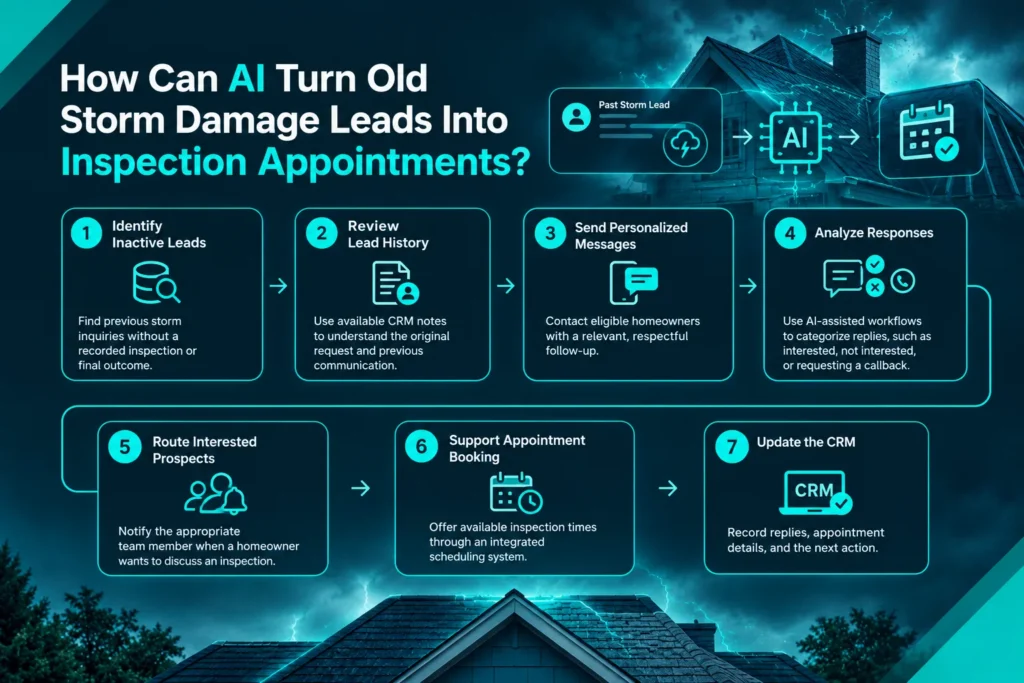
AI can help roofing companies reactivate past storm leads by organizing contact records, supporting personalized follow-ups, identifying interested replies, and connecting qualified prospects with an inspection-booking workflow.
A practical AI roofing lead reactivation process can follow these steps:
- Identify inactive leads: Find previous storm inquiries without a recorded inspection or final outcome.
- Review lead history: Use available CRM notes to understand the original request and previous communication.
- Send personalized messages: Contact eligible homeowners with a relevant, respectful follow-up.
- Analyze responses: Use AI-assisted workflows to categorize replies, such as interested, not interested, or requesting a callback.
- Route interested prospects: Notify the appropriate team member when a homeowner wants to discuss an inspection.
- Support appointment booking: Offer available inspection times through an integrated scheduling system.
- Update the CRM: Record replies, appointment details, and the next action.
A simple workflow looks like this:
Past Storm Lead → Record Review → Personalized Follow-Up → Homeowner Response → Inspection Scheduling → CRM Update
Automation helps reduce administrative work, but it should not replace professional judgment. A roofer must assess the property’s condition, determine whether repairs are needed, and explain the appropriate next steps.
AICOADS helps businesses implement CRM automation for roofing companies to manage lead follow-up, communication workflows, and appointment tracking.
Roofing companies using contractor software can also explore Jobber and GoHighLevel integration to understand how job management and CRM workflows can work together. The exact integration setup will depend on the systems and processes a business uses.
What Should Roofers Say When Reconnecting With Past Storm Leads?
Roofers should use short, personalized messages that remind homeowners of their previous inquiry, ask whether they still need help, and offer a straightforward next step.
Avoid generic messages that sound like mass advertising. Reference the original inquiry when the information is available, and do not claim that a property has storm damage without an inspection.
Example SMS for an old storm lead:
Hi [First Name], this is [Company Name]. You previously contacted us about a possible roofing issue after a storm in the Round Rock area. We wanted to check whether you still need an inspection. If you’d like to discuss it, reply here and we’ll help with the next steps.
Example email subject: Still Need a Roof Inspection After the Storm?
The email can briefly remind the homeowner of their earlier request, explain how to arrange an inspection, and provide a clear way to respond.
For effective roofing lead follow-up in Round Rock, consider a simple sequence:
- First contact: Send a personalized message referencing the previous inquiry.
- Second contact: If appropriate and permitted, follow up after a reasonable interval.
- Final contact: Offer one last opportunity to reconnect before pausing the campaign.
Use communication channels only when permitted, follow applicable consent and opt-out requirements, and stop promotional outreach when someone opts out. Avoid false urgency, exaggerated damage claims, or promises about insurance coverage.
Once a homeowner responds, consistent follow-up helps move the conversation toward a decision. See how AI roofing lead follow-up in Round Rock can support response management, callback coordination, and the next steps toward an inspection.
How Does CRM Automation Help Roofing Companies Book More Inspections?
CRM automation helps roofing contractors track inactive leads, assign follow-up tasks, record conversations, and move interested homeowners toward scheduled inspections.
Without a defined pipeline, a prospect may reply to a text but never receive a callback. Automated workflows can reduce these gaps by assigning responsibility and recording the next action.
A practical storm-lead pipeline includes:
Pipeline Stage | Purpose |
Old Storm Lead | Store the original inquiry and available contact history. |
Contact Attempted | Record that eligible follow-up has started. |
Interested | Flag homeowners who want to discuss an inspection. |
Inspection Scheduled | Record the confirmed appointment. |
Inspection Completed | Track whether the inspection took place. |
Estimate or Next Step | Record the outcome and agreed next action. |
Closed or Nurture | Mark the final outcome or a suitable future follow-up. |
Automation can also send appointment confirmations and reminders, notify staff about new replies, and create tasks for leads who need a personal callback.
Roofing companies can connect these processes with an appropriate AI receptionist service to support incoming inquiries and improve lead handling when team members are unavailable.
The goal is not simply to send more messages. It is to make sure relevant inquiries receive timely attention and that every active opportunity has a clear next step.
If a campaign also needs a dedicated page to explain inspection services and encourage inquiries, contractors can explore funnels and landing page services and this guide to landing page optimization in Austin, TX. Clear service information and an easy booking path can complement a well-managed follow-up process.
How Can Round Rock Roofers Measure Storm Lead Reactivation Results?
Roofing companies should measure how many inactive leads respond, how many inspections get scheduled, and how many appointments ultimately produce legitimate sales opportunities.
Track these metrics during each storm lead reactivation campaign:
- Leads reviewed: The number of old records checked for eligibility.
- Contact rate: The number of eligible leads successfully reached.
- Reply rate: The percentage of contacted leads who respond.
- Reactivation rate: The percentage of contacted leads who show renewed interest.
- Inspection booking rate: The percentage of contacted leads who schedule inspections.
- Show rate: The percentage of scheduled inspections that take place.
- Conversion rate: The percentage of completed inspections that lead to estimates or jobs.
- Cost per reactivated lead: Campaign costs divided by the number of leads reactivated.
These measurements help identify where a workflow needs improvement. For example, a high reply rate but low booking rate may indicate that prospects need clearer scheduling options or faster callbacks.